
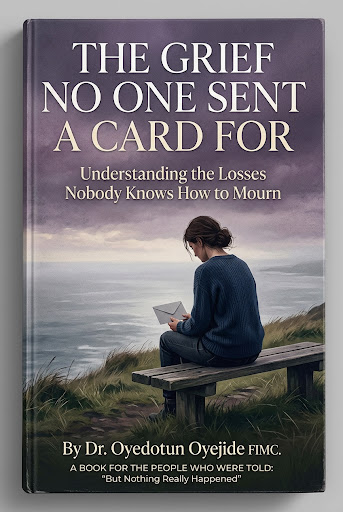
THE GRIEF NO ONE SENT A CARD Understanding the Losses Nobody Knows How to Mourn
About this book
THE GRIEF NO ONE SENT A CARD
Understanding the Losses Nobody Knows How to Mourn
By Dr. Oyedotun Oyejide FIMC
A BOOK FOR THE PEOPLE WHO WERE TOLD:
«“But nothing really happened.”»
What if you are grieving something that other people cannot see?
What if there was no funeral?
No coffin.
No obituary.
No condolence visit.
No flowers.
No sympathetic messages.
No one saying, “I am sorry for your loss.”
Yet something important disappeared from your life—and you have never quite been the same.
The Grief No One Sent a Card is a compassionate guide to the hidden forms of grief that are often misunderstood, minimized, or completely overlooked.
Because not every loss has a funeral.
And not every grief comes with a socially recognized reason to mourn.
You may grieve the death of a relationship.
The loss of a friendship.
A miscarriage or pregnancy loss.
Estrangement from someone you once loved.
A dream that never became reality.
A career or business that collapsed.
The loss of your former identity.
A home you had to leave.
A loved one who is physically present but no longer emotionally or mentally available.
The gradual disappearance of someone through dementia or serious illness.
The loss of a pet.
A family relationship that broke beyond repair.
A future you had planned but can no longer have.
Or even a version of yourself that existed before life changed.
Sometimes the person you lost is still alive.
Sometimes the relationship is still technically there.
Sometimes nobody else even recognizes that there was a loss.
But you know.
And that can make grief especially lonely.
---
WHEN PEOPLE SAY, “MOVE ON”
There are losses that society understands.
And there are losses that society does not know what to call.
When someone dies, people know what to do.
They call.
They visit.
They bring food.
They send messages.
They attend the funeral.
They offer condolences.
But what happens when your loss does not fit the familiar script?
Who comforts the person grieving a broken relationship?
Who acknowledges the parent mourning a child they never got to hold?
Who understands the person grieving an estranged family member?
Who sits with someone mourning a dream that has died?
Who tells the caregiver that they are also grieving the person their loved one used to be?
Who sends a card to the person whose marriage ended?
Who tells someone grieving a friendship that their pain is legitimate?
Too often, the answer is:
Nobody.
And sometimes the most painful words are:
«“But nothing really happened.”»
This book exists because something did happen.
Something changed.
Something ended.
Something was lost.
And your heart noticed.
---
THIS BOOK HELPS YOU UNDERSTAND HIDDEN GRIEF
The Grief No One Sent a Card explores the complicated territory of losses that are real but often socially unrecognized.
It helps readers understand:
- Why some losses hurt deeply even when others do not understand them
- Why grief does not always follow a predictable timetable
- Why you can miss someone who is still alive
- Why losing a relationship can feel like losing part of yourself
- Why miscarriage and pregnancy loss can carry profound grief
- Why estrangement can create complicated emotional pain
- Why ambiguous loss can leave people feeling emotionally stuck
- Why dementia can create grief long before physical death
- Why losing a dream can feel like losing a future
- Why pet loss can be deeply significant
- Why certain friendships deserve to be mourned
- Why identity loss can be difficult to explain
- Why people sometimes minimize another person's grief
- Why “at least…” statements can hurt more than they help
- How grief can coexist with love, anger, relief, guilt, gratitude and confusion
- How to acknowledge a loss without comparing it with somebody else's
- How to begin rebuilding life without pretending the loss never mattered
---
YOU DO NOT HAVE TO PROVE YOUR GRIEF
One of the most important messages in this book is simple:
Your grief does not become real only because other people recognize it.
You do not need a funeral to have lost something.
You do not need an obituary to have loved someone.
You do not need everybody's permission to acknowledge that something mattered to you.
And you do not have to minimize your pain simply because someone else believes your loss is insignificant.
At the same time, this book does not encourage you to remain trapped in grief.
It offers something more constructive:
permission to acknowledge the loss, understand what it has done to you, and gradually discover how to live forward without denying what happened.
---
FOR THE PERSON WHO HAS BEEN GRIEVING QUIETLY
This book may speak particularly to you if you have ever thought:
“Nobody understands why this hurts so much.”
“Everyone expects me to be fine.”
“I don't even know what to call what I am feeling.”
“They are still alive, so why do I feel like I lost them?”
“I lost something important, but nobody thinks it counts.”
“I wish somebody would simply acknowledge what happened.”
If any of these statements sound familiar, you are not alone.
There are many people walking around carrying invisible losses.
They go to work.
They answer messages.
They raise children.
They attend church.
They smile.
They laugh.
They continue with ordinary life.
And yet, somewhere inside them, they are carrying a loss that nobody sent a card for.
---
A COMPASSIONATE COMPANION—NOT A JUDGMENT
This is not a book that tells you exactly how long you should grieve.
It does not tell you that healing must happen according to a rigid timetable.
It does not compare your pain with someone else's.
Instead, it invites you to slow down and ask:
What exactly did I lose?
Why does this loss matter to me?
What am I grieving beneath the obvious circumstances?
What has this loss changed about me?
What do I need to acknowledge before I can begin moving forward?
These questions can open the door to a healthier understanding of grief.
---
FOR READERS, FAMILIES AND ANYONE WHO WANTS TO UNDERSTAND
The Grief No One Sent a Card is not only for people experiencing hidden grief.
It can also help family members, friends, caregivers, counselors, faith communities, teachers, employers and anyone who wants to respond more compassionately when someone is hurting.
Sometimes people do not need you to fix their grief.
They simply need you to stop telling them that they have no reason to grieve.
Sometimes the most healing words are simply:
“I understand that this mattered to you.”
“I can see that you are hurting.”
“You don't have to explain everything for your feelings to matter.”
---
BECAUSE SOME LOSSES DESERVE TO BE NAMED
There are griefs that receive public recognition.
And there are griefs that happen quietly behind closed doors.
This book gives language to some of those quieter losses.
It reminds us that grief is not always about death.
Sometimes grief is about absence.
Sometimes it is about change.
Sometimes it is about what never happened.
Sometimes it is about what used to be.
Sometimes it is about someone who is still here but no longer accessible in the same way.
And sometimes it is about saying goodbye to a future you once believed was certain.
---
YOUR LOSS DOES NOT HAVE TO BE VISIBLE TO BE SIGNIFICANT.
If you have ever experienced a loss that nobody seemed to know how to acknowledge...
If you have ever been expected to “move on” before you had processed what happened...
If you have ever felt embarrassed because your grief seemed too complicated to explain...
If you have ever wondered whether you were even allowed to mourn...
This book was written with you in mind.
THE GRIEF NO ONE SENT A CARD
Understanding the Losses Nobody Knows How to Mourn
By Dr. Oyedotun Oyejide FIMC
Because sometimes the deepest grief is the grief nobody knows how to name.
And sometimes the first step toward healing is simply being able to say:
«“Yes. Something was lost. And it mattered.”»
Read it. Reflect on it. Share it with someone whose grief has gone unnoticed.
To the people whose losses received no flowers, no funeral and no card—your story deserves to be acknowledged.
Start a reading club for this book, or join one.
You may also like
About the Author
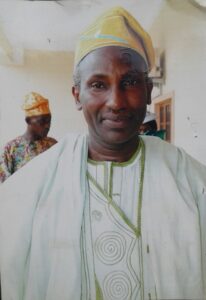
Dr. Oyedotun Oyejide Dr. Oyedotun Oyejide, popularly known as Smart Oyedotun Oyejide, is a Nigerian author, publisher, journalist, educator, literary consultant, and inspirational speaker. He is recognized for his contributions to literature, publishing, journalism, and literacy development in Nigeria. His writings span fiction, poetry, children's literature, Christian literature, personal development, entrepreneurship, education, and social commentary. Early Life Oyedotun Oyejide was born in Ibadan, Oyo State, Nigeria. He developed an interest in reading and creative writing at an early age and began writing while still a child. His passion for literature evolved into a lifelong career dedicated to educating, inspiring, and empowering readers through books and journalism. Education Dr. Oyejide pursued higher education in Nigeria, developing academic and professional interests in communication, literature, journalism, publishing, and education. His academic training has complemented his practical experience across the media and literary industries. Career Dr. Oyejide has built a multifaceted career as an author, publisher, journalist, editor, educator, and media consultant. Throughout his professional life, he has contributed to the promotion of literacy, ethical journalism, creative writing, and knowledge sharing. As an author, he has written extensively across several genres, including novels, poetry, inspirational literature, business, leadership, Christian living, children's books, and educational materials. His works reflect a commitment to moral values, intellectual growth, entrepreneurship, and national development. In journalism, he has served in editorial and publishing capacities, producing articles and commentaries on contemporary social, educational, and developmental issues. He has also worked as a lecturer in Mass Communication, mentoring students and aspiring media professionals while encouraging excellence in communication and responsible journalism. Beyond writing, Dr. Oyejide has actively supported emerging writers through mentoring, publishing initiatives, and literary advocacy, promoting a culture of reading and creative expression. Literary Contributions Dr. Oyejide's literary output includes books, e-books, articles, essays, poems, and plays covering a wide range of subjects. His work seeks to combine education with inspiration, encouraging readers to embrace lifelong learning, ethical leadership, entrepreneurship, and faith-based living. His writings consistently emphasize the transformative power of books and the importance of preserving African stories and values for future generations. Philosophy Dr. Oyejide believes that literature is a catalyst for personal transformation and national development. He has consistently advocated for reading, education, creativity, integrity, and purposeful leadership as foundations for building stronger communities and future generations. Public Speaking As a conference speaker and literary advocate, Dr. Oyejide has addressed audiences on writing, publishing, journalism, leadership, entrepreneurship, literacy development, education, Christian living, and personal growth. His presentations combine practical experience with motivational insights aimed at empowering individuals and institutions. Selected Works Among his published works are novels, inspirational books, educational publications, business guides, Christian literature, and numerous articles. His writing portfolio reflects decades of dedication to knowledge dissemination and creative expression. Legacy Dr. Oyedotun Oyejide is regarded as an advocate for literacy, publishing, and lifelong learning. Through his books, journalism, teaching, and mentorship, he has sought to encourage readers and aspiring writers to use knowledge as a tool for personal achievement and social progress. His enduring vision is to leave a legacy of informed minds, empowered communities, and a vibrant culture of reading across Africa and beyond.